Single CNC installation
One 18,260 lb machining center with a standard-access full-service installation
Illustrative planning range only. Actual scope, weights, access, location, and schedule must be verified.

Build a practical rough order of magnitude cost range for industrial machinery rigging, heavy forklift work, millwright labor, crane support, trucking, mobilization, and final equipment placement.
Industrial projects often need a number before they are ready for an estimate. A plant engineer may be comparing two production layouts. A machinery dealer may need to understand the installed cost before a customer commits. A purchasing team may be building a capital request while weights, drawings, and final delivery dates are still incomplete. Waiting for every detail can stall a good project; guessing can put a bad number into the budget.
We built the free rigging estimator to fill that gap. It turns the information normally available early— machine type, weight, quantity, general scope, access difficulty, schedule pressure, and travel—into a transparent planning range. The goal is not to replace an experienced machinery rigger. The goal is to help you make the next decision with more context than a cost-per-pound guess or a number borrowed from an unrelated move.
The result is intentionally a range. A ROM estimate acknowledges that the final forklift configuration, center of gravity, pick points, floor capacity, doorway clearance, crane reach, sequence, and crew plan still need to be verified. That honesty makes the number more useful for early planning—and makes it clear when the project is ready to graduate to a site-specific rigging quote.

Machinery moving cost comes from the plan required to handle the equipment safely. TOOLroom builds that plan in layers, then rolls the modeled labor, equipment, and mobilization into a low-to-high ROM range.
Enter names, quantities, and weights, or upload a spreadsheet, PDF, or equipment-list image.
Select unloading, rigging assistance, full installation, on-site movement, or relocation.
Standard, difficult, or severe access changes the expected crew effort, duration, and support plan.
See the estimated crew, workdays, heavy forklift, crane, trucking, and mobilization logic.
Carry the ROM into budgeting, compare scenarios, or send the project to Accuwright for review.
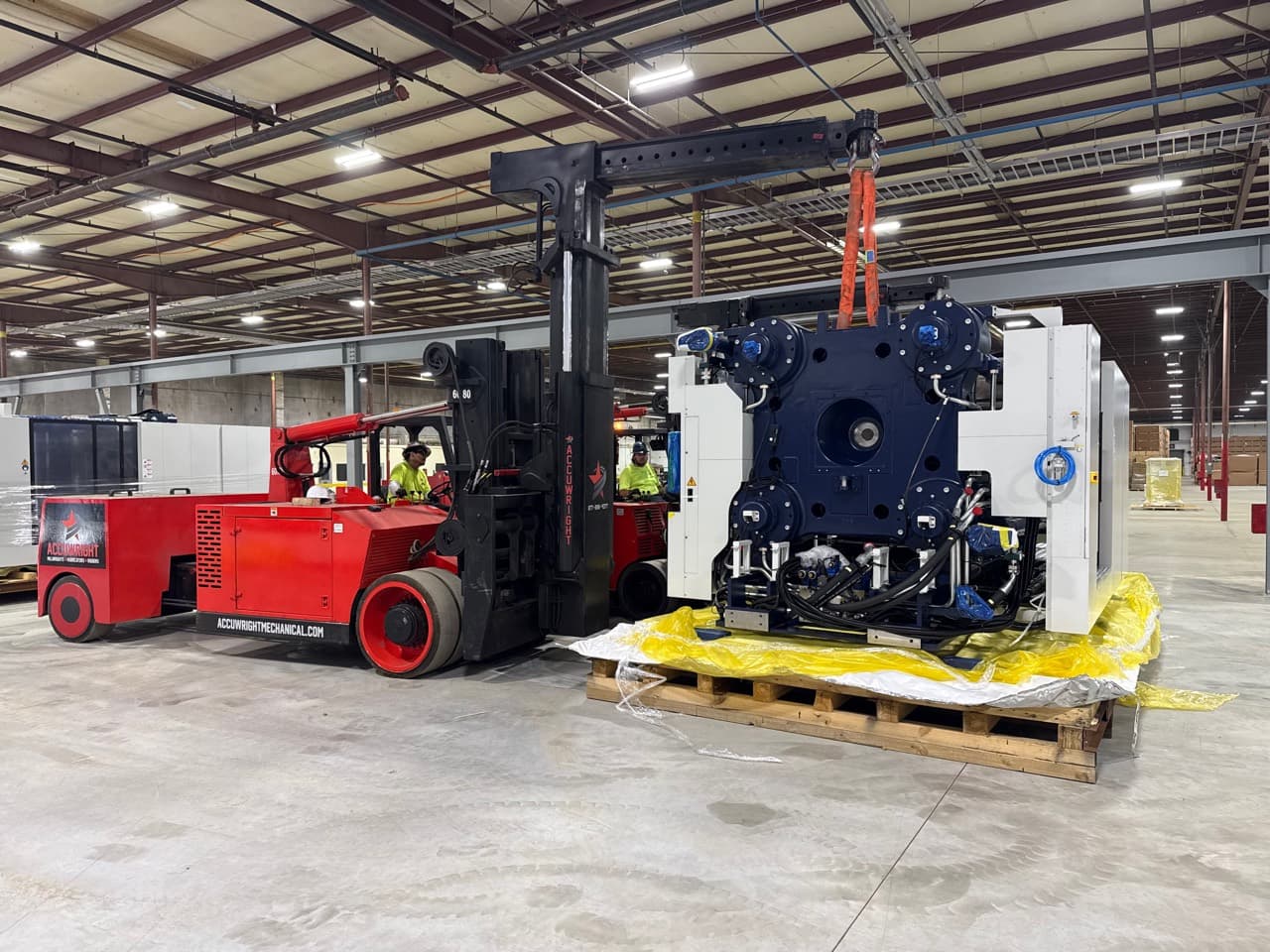
Heavy-equipment rigging begins with unloading conditions: trailer position, grade, dock geometry, load dimensions, forklift capacity, center of gravity, and a verified path into the facility. A useful ROM carries those conditions into the crew and equipment plan instead of pricing only the final pick.
Background: high-capacity forklift unloading a wrapped industrial machine at a manufacturing facility.

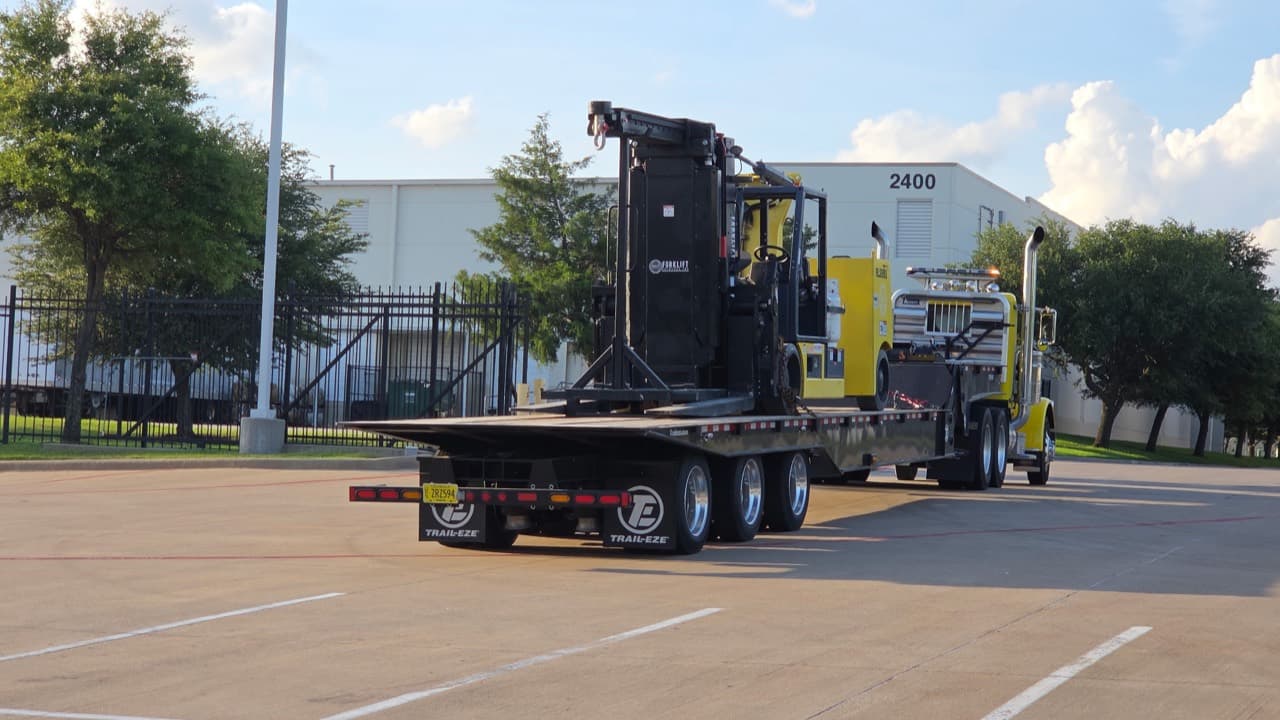
Industrial forklifts used for machinery moving are not ordinary warehouse equipment. Depending on the lift plan, mobilization may require a lowboy trailer, support truck, rigging gear, qualified operators, and time to load, secure, transport, unload, and later recover the equipment.
That is why two similar machine installations can price differently when one is close to an operating location and the other is several hours away. TOOLroom includes mobilization logic so early budgets do not forget the cost of getting the right heavy forklift to the work.
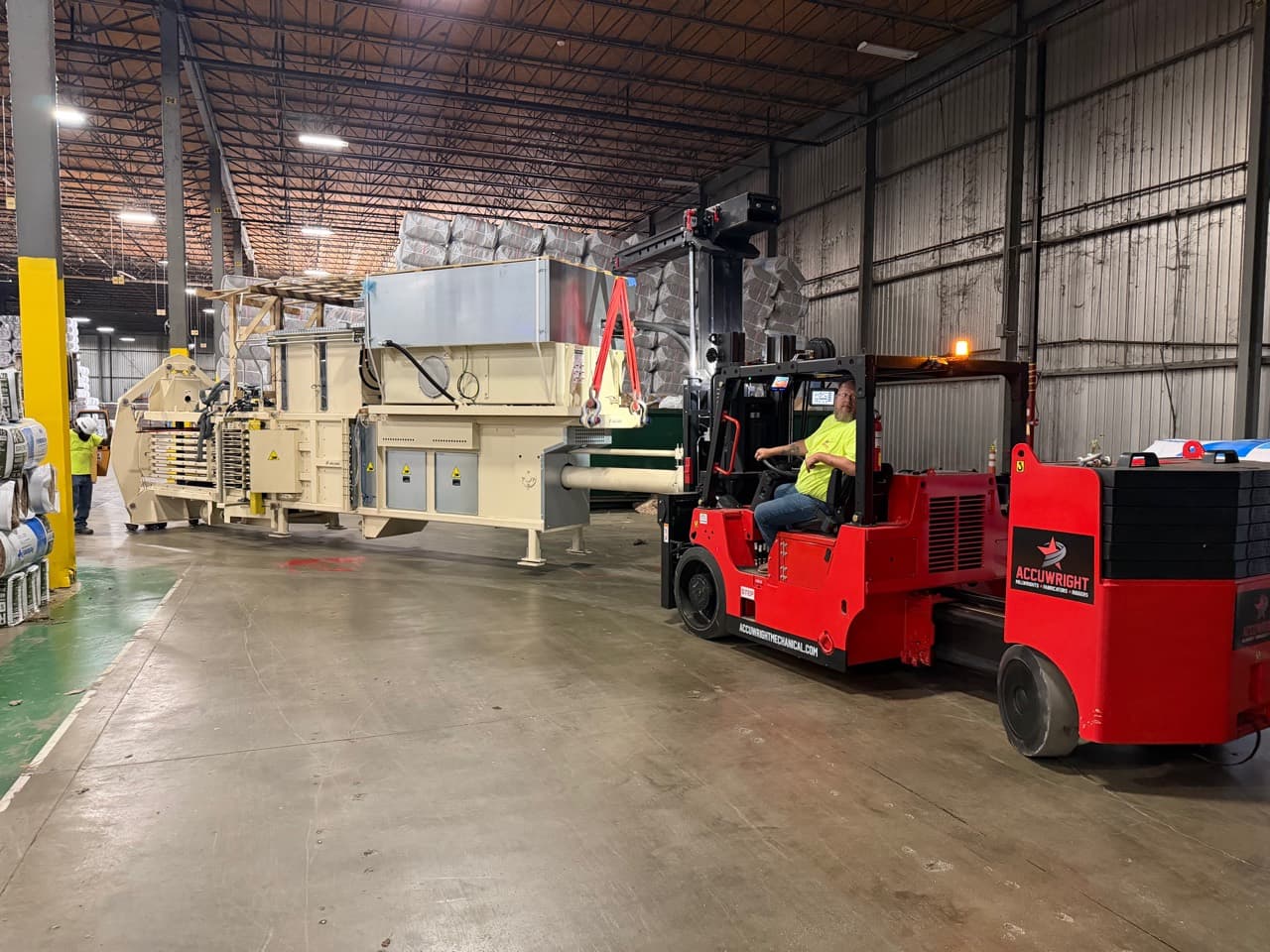
Once equipment is inside, the rigging plan shifts from transportation to precise handling. Clearances, floor condition, overhead utilities, turning radius, production traffic, machine geometry, and final orientation determine how the crew approaches each movement.
Spotters, lift attachments, blocking, cribbing, skates, and support forklifts may all become part of the sequence. A ROM estimate cannot replace a field-verified plan, but it should reserve enough labor and equipment to reflect the real installation—not merely unloading a machine beside the door.
Build a project range
A machinery installation estimate needs to follow the scope from mobilization through final placement. The model considers the primary cost categories that typically shape an industrial rigging plan.
Open the rigging calculator →Crew size and duration respond to machine count, scope, weight, access, and schedule.
The equipment plan considers primary lifting capacity and support-lift needs.
Very heavy or constrained picks can trigger crane or multiple-lift planning logic.
Specialized forklifts, service trucks, tooling, and crews must reach the jobsite.
Plant-to-plant work adds approximate distance, equipment transport, and machine freight.
Restricted access, production constraints, and urgent scheduling can increase project effort.
These examples use the same live estimating logic as the public tool, moving from a smaller local installation to a larger regional relocation. They show how scope, access, machine count, and distance change the planning range.
One 18,260 lb machining center with a standard-access full-service installation
Illustrative planning range only. Actual scope, weights, access, location, and schedule must be verified.
Four CNC machines, three press brakes, and five pieces of support equipment
Illustrative planning range only. Actual scope, weights, access, location, and schedule must be verified.
The same production package moved between plants with machinery freight and lift-equipment transfer
Illustrative planning range only. Actual scope, weights, access, location, and schedule must be verified.
ROM Estimator is built for the way machine lists actually arrive: rough equipment schedules, emailed PDFs, photos of data plates, and half-clean spreadsheets. Drop the file, review the parsed machines, then price the scope.
A ROM estimate and a formal quote answer different questions. The best time to use each depends on how far the project has progressed and what decision the number must support.
A ROM range is not a promise to perform the work for a fixed price. A formal Accuwright proposal is developed from verified project information and defines the binding scope, price, assumptions, exclusions, and terms.
Machine weight matters, but it rarely tells the whole story. These conditions often explain why two projects with similar equipment produce different plans and prices.
Tall, offset, fragile, or top-heavy equipment can require a different forklift, boom, gantry, or rigging arrangement than a compact machine of equal weight.
Door height, aisle width, overhead utilities, dock condition, ramps, floor capacity, turning radius, and production congestion influence both equipment choice and duration.
Removing guarding, conveyors, injection units, electrical cabinets, or process connections adds skilled labor and can change the lifting sequence.
A crane pick depends on load weight at radius, setup area, ground conditions, overhead restrictions, permits, and whether the load must pass through a roof or wall opening.
Specialized heavy forklifts and rigging crews have to be transported. Remote work, multiple trips, and plant-to-plant trucking can become major cost drivers.
Night work, weekends, accelerated starts, short shutdowns, cleanroom requirements, safety orientation, and work around active production can increase effort.
A rough order of magnitude, or ROM, estimate is an early planning range built before every project detail has been verified. It is useful for budgeting, comparing options, and deciding whether a machinery move or installation deserves further engineering. The TOOLroom ROM is presented as a range with an expected accuracy of plus or minus 25 percent, not as a binding bid.
Yes. Accuwright built the estimator so plant teams, machinery dealers, procurement groups, and project planners can develop a reasonable first budget without waiting for a formal estimating cycle. There is no charge to calculate a planning range.
Yes. The model evaluates machine weights and project conditions to plan crew labor, forklifts, lift equipment, service support, mobilization, trucking, and crane or tandem-lift conditions when they are appropriate.
Request a formal quote when the project is approved, the purchase order needs a firm value, the move date matters, or access and safety conditions must be verified. A binding quote should use confirmed weights, dimensions, addresses, equipment drawings, access photos, floor conditions, schedule constraints, and a clearly defined scope.
Yes. Add the equipment list, select relocation scope, and include an approximate origin-to-destination distance. The range can support early plant-move budgeting, but a complex relocation still needs a detailed sequence, trucking plan, site review, and formal quote before execution.
Weight is only one cost driver. Load shape, center of gravity, access, floor capacity, doorway clearance, crane reach, disassembly, schedule, mobilization distance, production restrictions, and final placement requirements can materially change the rigging plan.
Enter one machine or an entire equipment list. Review the modeled crew and forklift plan, use the range for budgeting, and send the project when you are ready for Accuwright to help turn planning into an executable quote.