
01
Suspended weight
Include the machine, hook block, lifting beam, slings, shackles, and every attachment below the hook.
What size crane do you need? Start with pick weight and working radius—but keep the full equipment path open. Many plant moves fit a purpose-built heavy forklift with a boom. When they do not, Accuwright transitions seamlessly to a coordinated crane pick.
Planning tool—not a lift plan. The assigned crane, stamped load chart, qualified crew, verified site conditions, and project-specific plan govern every pick.
The load is the first number. Working radius is the second—and often the one that changes the answer. TOOLroom compares the pick against representative main-boom capacity curves for 100T, 200T, 300T, 400T, and 500T classes without extending past the represented chart data.
Include the machine, hook block, lifting beam, slings, shackles, and every attachment below the hook.
Measure horizontally from the crane center of rotation to the load centerline at the controlling point of the pick.
Boom length, counterweight, outriggers, work area, and reeving can materially change rated capacity.
Use the result to start planning—not to operate. The assigned crane and stamped chart govern the actual lift.
Enter the total suspended weight, not just the machine shipping weight. Always confirm the real lift with the assigned provider.
Industrial buyers often search for a crane before they know that purpose-built 100,000- and 140,000-pound-class machinery movers with boom configurations exist. The most efficient plan starts with the entire move: unload, pick, travel, clear the obstruction, enter the building, and make the final set.
Often the better first look for indoor work, tight aisles, unloading, low-clearance travel, and precise final placement.
Becomes the right path when the pick must clear a roof, wall, pit, process line, or a forklift capacity envelope.
The crane handles reach. The heavy forklift receives, travels, turns, and makes the controlled final set.
A “100-ton crane” does not lift 100 tons everywhere. Capacity changes with radius, boom, counterweight, outrigger position, work area, reeving, and the actual machine chart. That is why TOOLroom leads with radius.
Read OSHA load-chart requirements| Crane class | Representative model | 25 ft radius | 60 ft radius | 100 ft radius |
|---|---|---|---|---|
| 100T | Link-Belt HTC-86100 | 60,100 lb | 14,600 lb | 4,800 lb |
| 200T | Liebherr LTM 1200-5.1 | 193,475 lb | 79,000 lb | 40,000 lb |
| 300T | Liebherr LTM 1250/1 | 232,667 lb | 101,750 lb | 54,525 lb |
| 400T | Liebherr LTM 1300 | 332,750 lb | 123,000 lb | 60,000 lb |
| 500T | Liebherr LTM 1500-8.1 | 454,000 lb | 190,000 lb | 99,500 lb |
Representative planning data only—not a lift plan. Values show the chart-backed main-boom envelope represented in TOOLroom. The assigned crane's stamped chart, configuration, site conditions, and qualified lift team control the actual pick.
Accuwright is an industrial machinery moving, rigging, millwright, and turnkey project contractor. For more than 20 years, our crews have planned machinery removals, installations, plant relocations, rooftop picks, structural sets, and final placements.
That changes how we select equipment. We are not trying to force every job into a crane or every job into a forklift. We choose the path that fits the weight, reach, access, travel, final set, and schedule—then coordinate the handoff as one move.
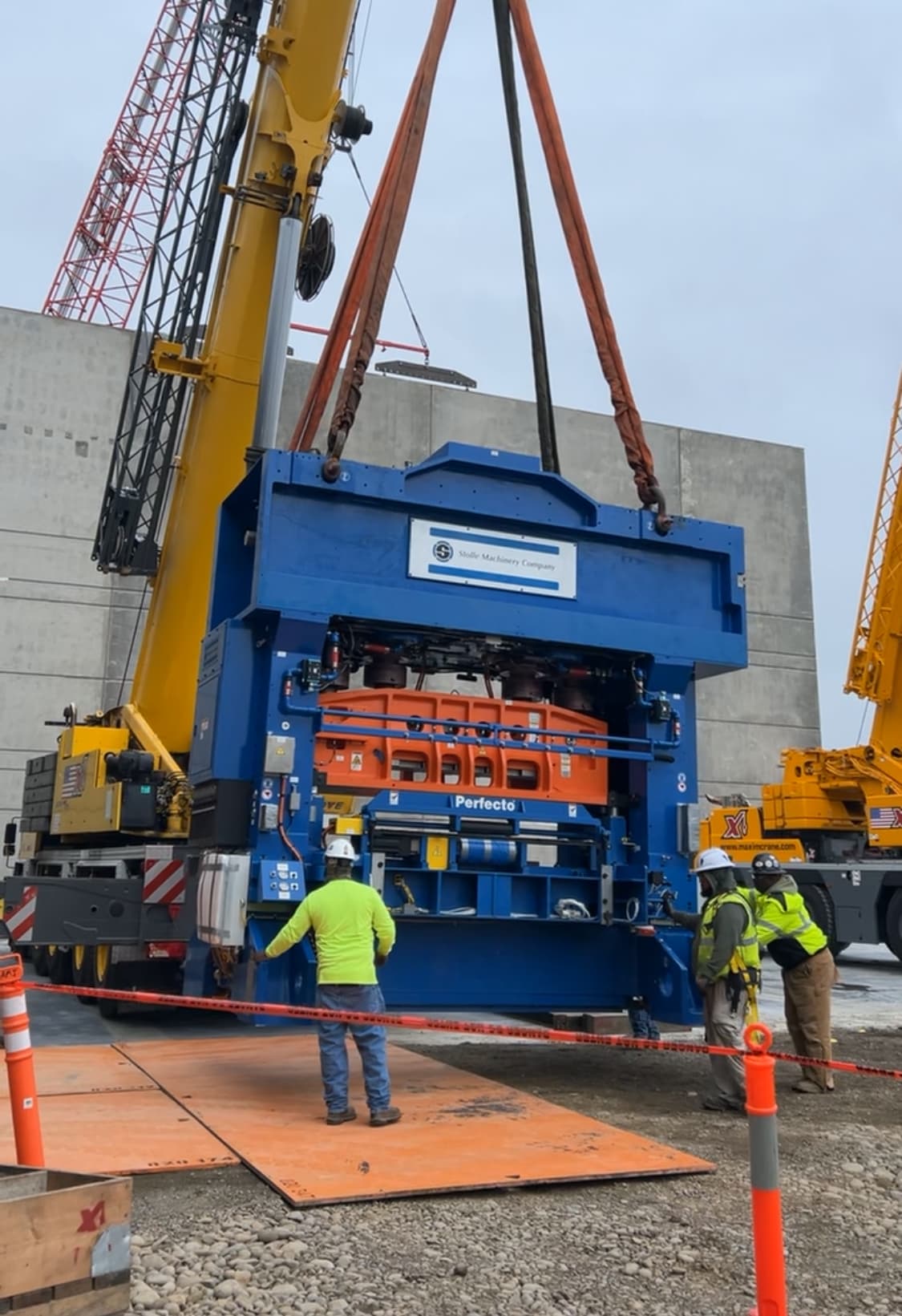
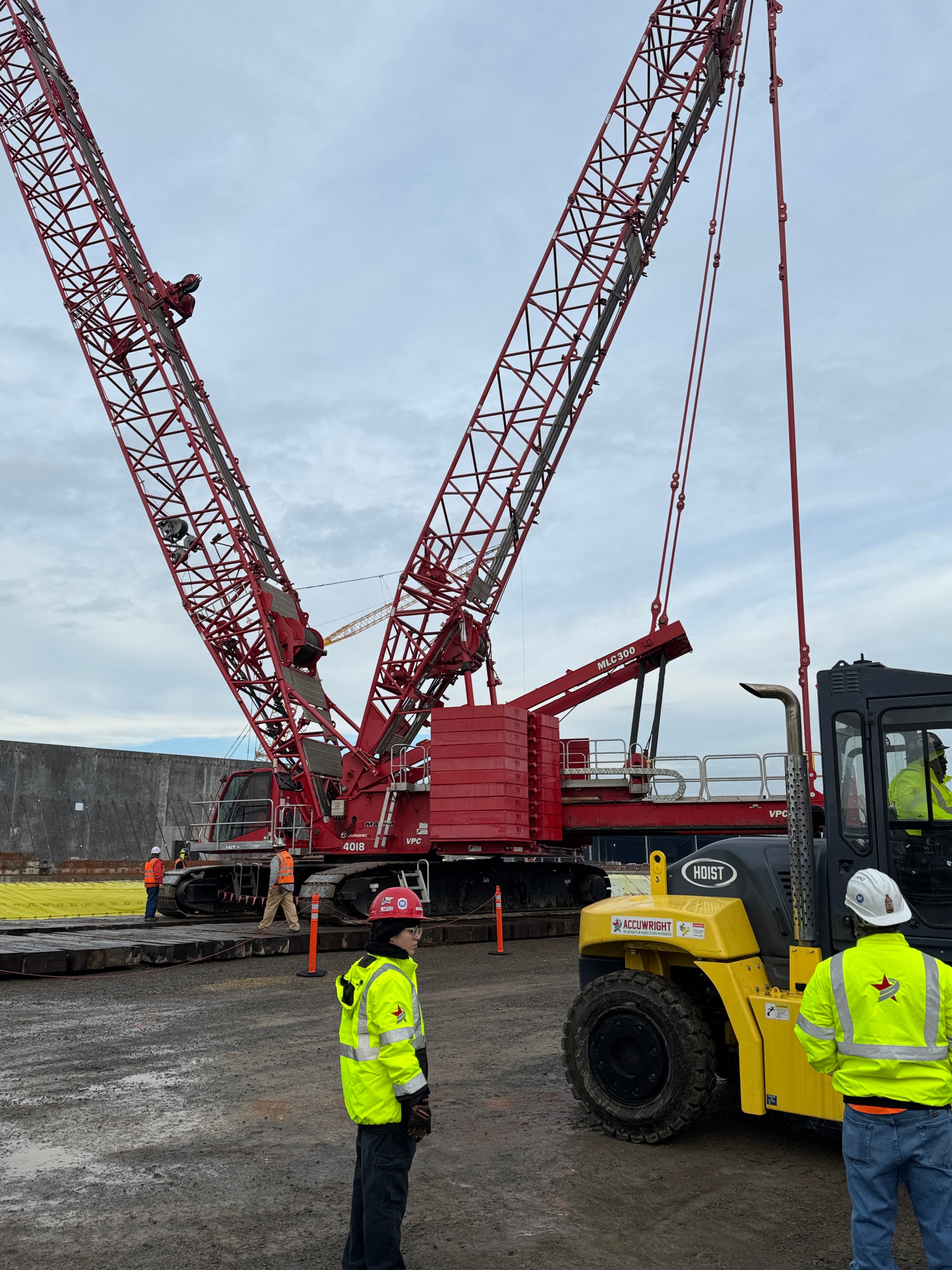
These are the conditions that make crane selection real: suspended machinery, active plants, rooflines, congested sites, structural steel, rigging geometry, and a destination that still has to be reached after the hook comes off.
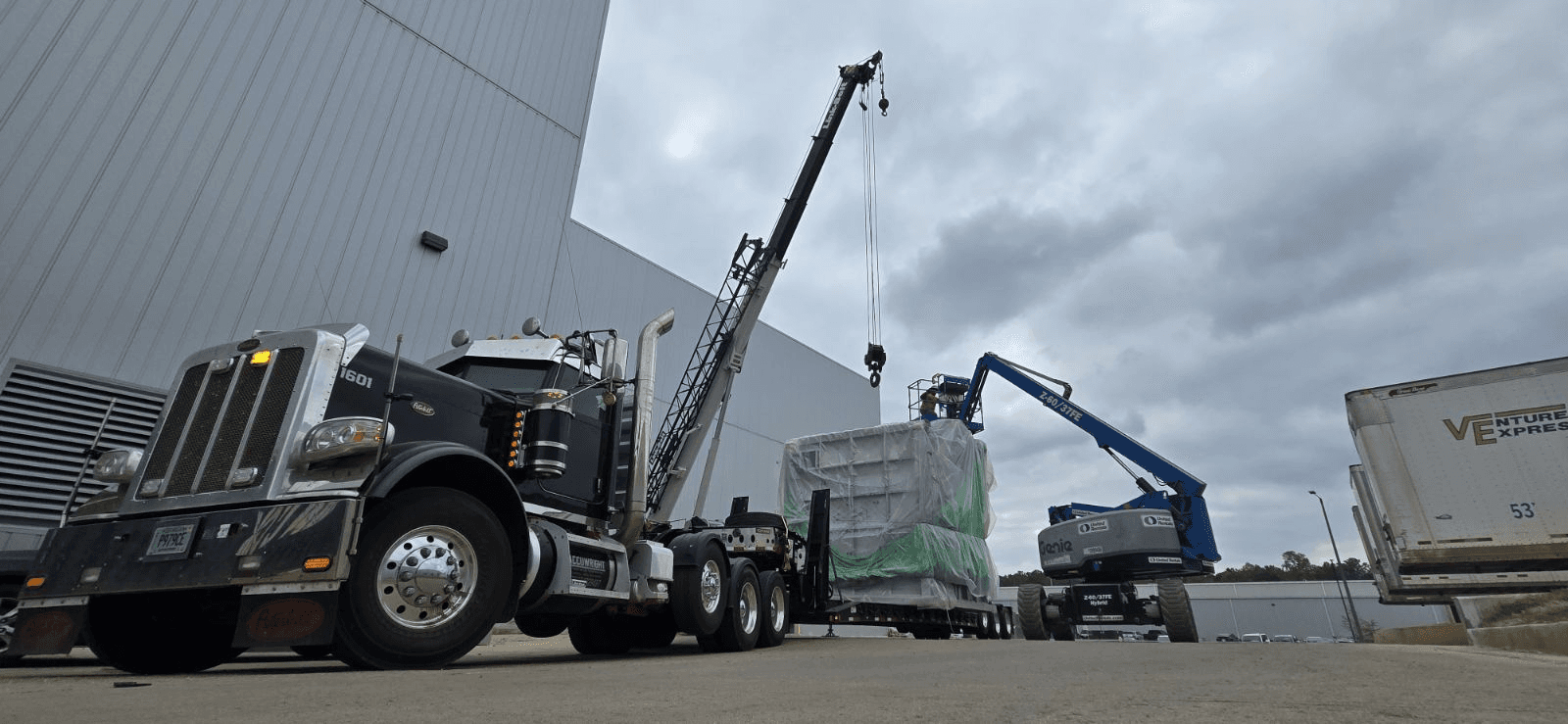
The lift is one step in a larger move that still includes unloading, access, travel, and final placement.
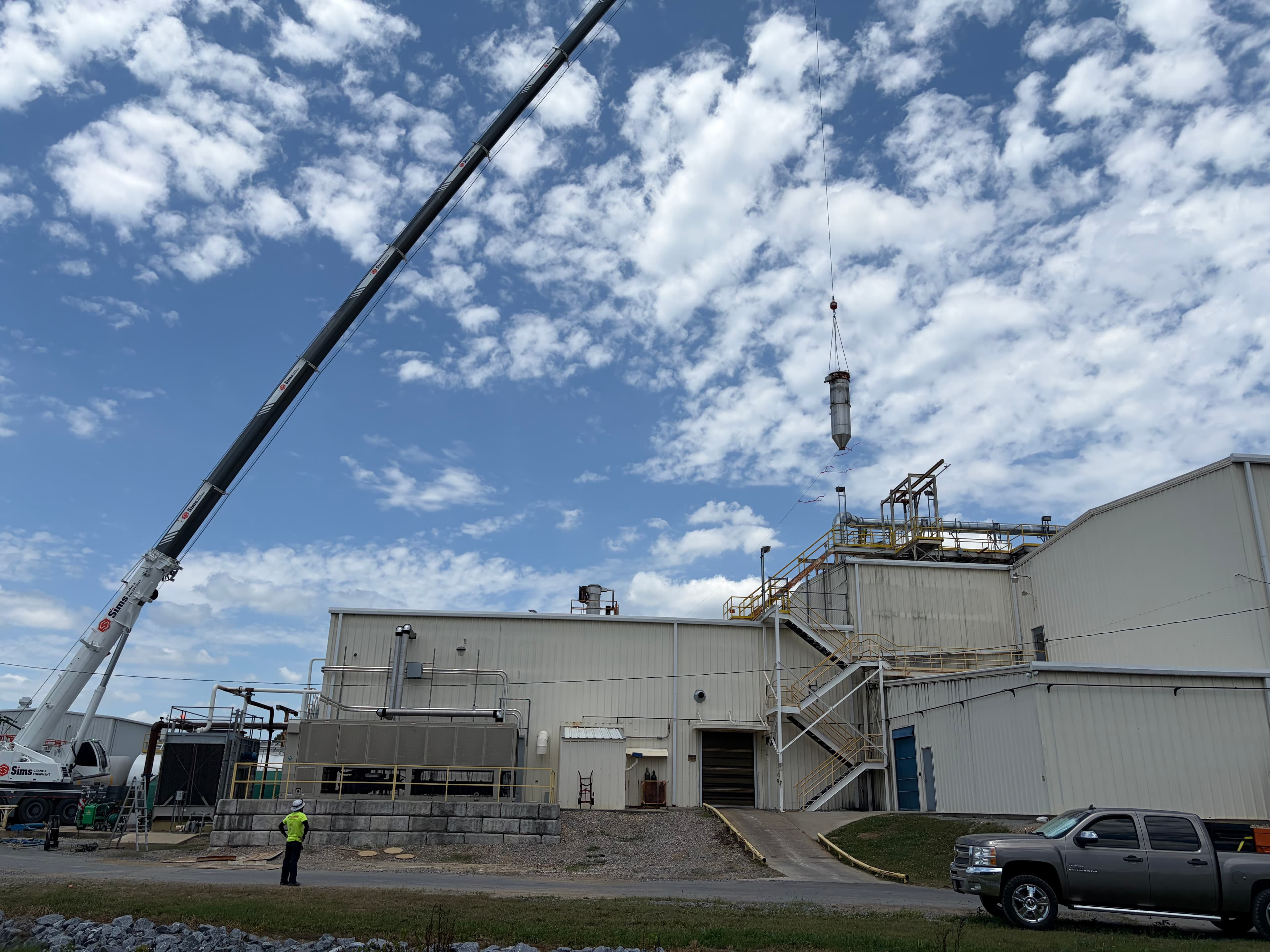
Height, obstructions, pick location, and set location can make radius the controlling input.
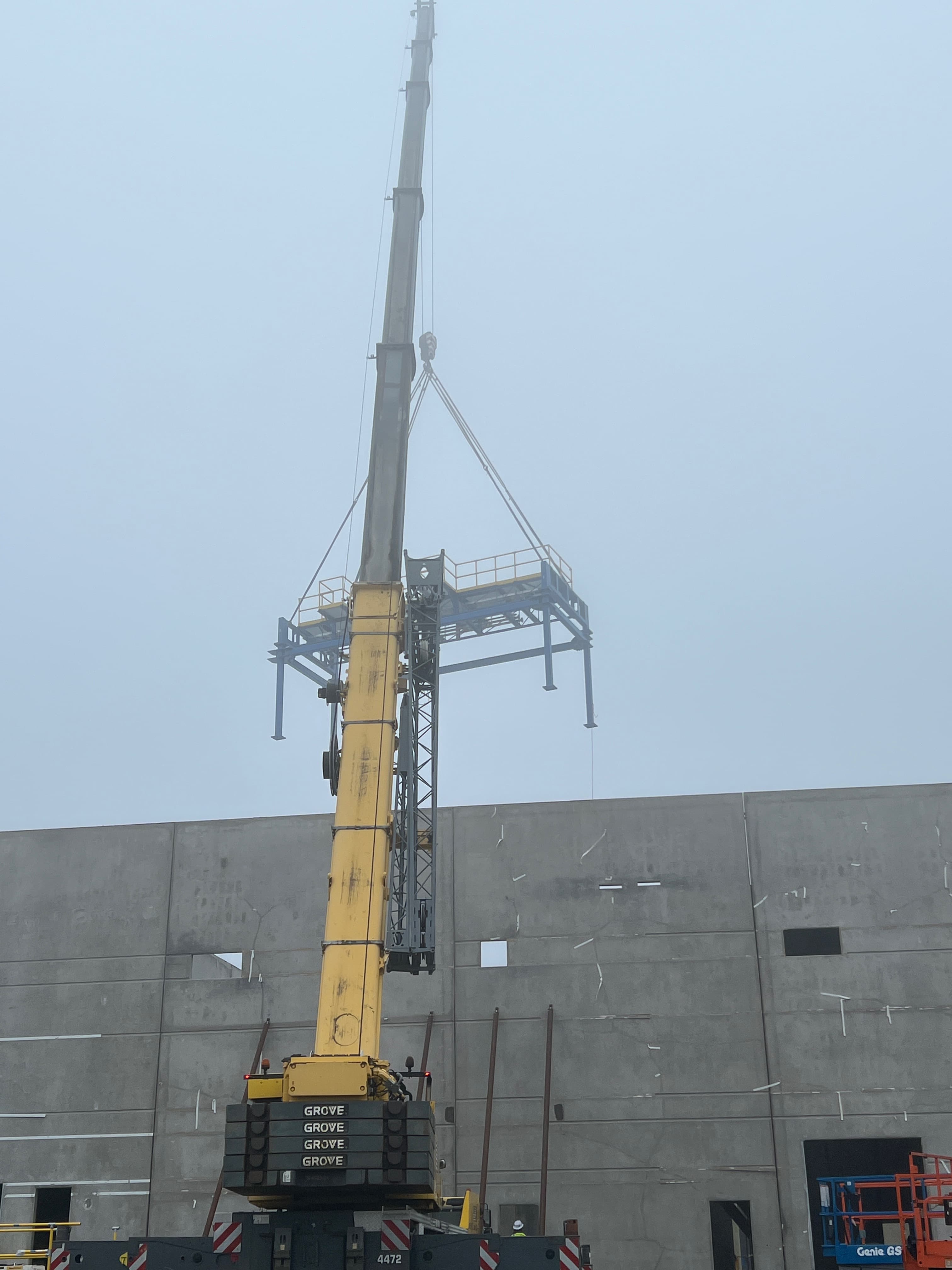
Long reach and high placement require a verified crane configuration and project-specific plan.
A useful crane conversation starts with the complete pick and placement path. These six inputs help the planning team identify the right equipment strategy before field verification begins.
Machine plus rigging, beams, hook block, attachments, fluids, tooling, and loose components.
Where the load begins, where it lands, estimated radius, lift height, and required orientation.
Doors, rooflines, pits, pipe racks, utilities, process equipment, power lines, and traffic.
Crane setup area, underground concerns, slab or soil information, slope, weather, and exclusion zones.
Dimensions, center of gravity, approved lift points, OEM instructions, sensitivity, and final alignment needs.
Truck position, unloading plan, crane-to-forklift handoff, building entry, final set, and production schedule.
Crane size depends on the total suspended load, working radius, boom length, lift height, setup configuration, ground conditions, and obstructions—not weight alone. Enter the lifted weight and estimated radius in the TOOLroom Crane Selector for an initial planning class, then have the actual crane provider verify the pick against the stamped load chart and site-specific lift plan.
A 100-ton class rating is not available at every radius. In the representative 100T chart used by TOOLroom, rated capacity is about 60,100 pounds at a 25-foot radius and 14,600 pounds at a 60-foot radius. The exact crane, boom, counterweight, outrigger setup, work area, and chart always control.
As the hook moves farther from the crane centerline, leverage on the crane increases. That reduces the allowable suspended load. This is why a crane tonnage label by itself cannot answer whether a pick fits.
Not always. Purpose-built industrial forklifts and machinery movers—including 100,000- and 140,000-pound classes with boom configurations—can be a practical solution for close-in picks, indoor work, unloading, and final placement. A crane becomes the better path when weight, radius, height, access, or obstacles exceed the forklift envelope.
Yes. A coordinated plan may use a crane to clear a roof, wall, pit, or exterior obstruction, then use a heavy forklift or machinery mover to receive, travel, and make the final set inside the plant. Accuwright plans the equipment transition as one integrated move.
No. Accuwright does not sell crane equipment. We are an industrial machinery moving, rigging, millwright, and turnkey project contractor. We use and coordinate cranes as part of real machinery installations, removals, relocations, and heavy picks.
Start with the machine weight, rigging weight, dimensions, center of gravity, pick and set locations, estimated working radius, lift height, access route, overhead and underground hazards, ground or slab information, and required schedule. Field verification is still required.
No. It is a planning and estimating tool only. It does not authorize a pick or replace the actual crane load chart, qualified operator, qualified rigger, site review, ground assessment, rigging design, or engineered lift plan.
Run the weight and radius through TOOLroom. If a heavy forklift is the smarter path, check that chart too. If the move needs a crane, Accuwright can carry the project from planning through final set.